WHO WE ARE

Clean Energy Lives Here is your friendly guide to the world of clean energy home improvements, showing Massachusetts residents how reducing reliance on fossil fuels can save money, increase home comfort, and reduce pollution. We provide information on the optimal clean energy home for homeowners, renters, and property owners. This includes buying renewable electricity, saving money on utility bills, weatherizing your home, switching to heat pumps, reducing your reliance on fossil fuel appliances, and using electrified transportation. These educational resources on our website help residents learn what clean energy solutions are available to them, determine which solutions would be a good fit for their home, discover rebates, tax credits, and other incentives, as well as find local installers to put their upgrades into action.

Clean Energy Lives Here is brought to you by the Massachusetts Clean Energy Center (MassCEC) and the Massachusetts Department of Energy Resources. MassCEC is a state economic development agency dedicated to accelerating the growth of the clean energy sector across the Commonwealth to spur job creation, deliver statewide environmental benefits, and to secure long-term economic growth for the people of Massachusetts. The Massachusetts Department of Energy Resources (DOER) develops and implements policies and programs aimed at ensuring the adequacy, security, diversity, and cost-effectiveness of the Commonwealth’s energy supply to create a clean, affordable, and resilient energy future.

BRAND STRATEGY

In Massachusetts, about half of all greenhouse gas emissions come from residential homes and passenger vehicles. That’s why every household in Massachusetts has an important role to play in reducing emissions and meeting the state’s net zero goals. Clean Energy Lives Here’s purpose is to highlight the cost savings, convenience, accessibility, efficiency, and benefit of clean energy solutions to all Massachusetts residents and help them find the information and resources they need to make the switch.

Mission

We provide clear guidance, trusted resources, and practical pathways for Massachusetts residents to adopt clean energy in their home and transportation by replacing fossil fuel systems and appliances with clean alternatives.

Vision

We want to help every Massachusetts home become fully electrified, efficient, and weatherized to help residents pay less for utilities, be more comfortable at home, and enable the state to reach net zero emissions by 2050.

Values

We make clean energy accessible.

It’s critical that clean energy solutions are available to all Massachusetts residents. We help everyone in Massachusetts achieve a clean energy home, meeting them where they are, regardless of their income, housing type, technical knowledge, or experience.

We empower Massachusetts residents to make the switch.

We provide clear guidance, trusted resources, and practical pathways that increase knowledge and remove barriers to help Massachusetts residents adopt clean energy solutions for their home and transportation.

We recommend solutions with real impact.

The solutions we recommend offer measurable benefits to Massachusetts and our residents. Clean energy solutions provide cost savings and increased comfort, while reducing our reliance on fossil fuels to help meet the Commonwealth’s goals.

We support Green Communities.

We intend for cities and towns that are designated Green Communities to leverage Clean Energy Lives Here to teach residents about energy-related building improvements. We encourage community organizations and local non-profits to borrow from our writing, designs, and videography. We do require that any organization that’s using our content add “Source: MassCEC” when they re-use our work.

Tone of Voice

Clean Energy Lives Here is a trusted, reliable source of clean energy home improvement information for Massachusetts residents. The information should be presented in an easily digestible way and centered around the benefits to the consumer.

Our brand voice is informative yet relatable. We seek to encourage the consumer by providing accurate, reliable information about transitioning to clean energy technologies. We never talk down to the consumer and instead greet them wherever they are in their clean energy journey. We favor a tone that encourages incremental changes and small adoptions as opposed to massive renovations. We speak to residents of the Commonwealth with local understanding as their trusted advisor. Our language is inclusive, clear, and direct.

We embrace the positive impact of clean energy technologies and the good they create for the planet with a focus on powerful messaging with clear value propositions. We emphasize the benefits of clean energy technologies, like mentioning their cost-saving potential for homeowners, instead of using strong negative terms to introduce a problem that these solutions can solve. We reinforce the values of a clean energy transition by providing options for the numerous ways that every consumer can have an impact. We work together with the people of Massachusetts towards a bright clean energy future.

CONTENT GUIDELINES

Style Guide

Capitalization & Grammar

  • Solution names do not need to be capitalized in regular text (unless at the beginning of a sentence). But should be capitalized in navigation and in headers when appropriate.
  • Use the serial/oxford comma in a list of three or more items.

Numbers

  • Spell out numbers 1-9 and use numerals for 10 and up.
  • Use the percent sign (%) instead of spelling out percent.
  • For dates, spell out the full month, day, and year or use an abbreviated spelling of the month, day, and year (e.g., September 1, 2025 or Sept. 1, 2025).

Readability

  • Aim for 6th-8th grade reading level
  • Avoiding use of jargon or overly technical figures
  • If data is used, try and provide relatable visual examples or language that helps readers envision real-world impact

Messaging Guide

  • Do lead with savings, comfort, connectivity, health, and other benefits rather than using phrases like “reduce carbon footprint” or “greenhouse gas reduction” to appeal to a broad audience of consumers.
  • Do be sensitive of words when discussing diversity. Use phrases like “environmental justice communities” instead of “communities of color.” Use terminology like “income qualified” when referring to low- and moderate-income residents.
  • Do discuss the environmental benefits of clean energy with phrases that emphasize reducing pollution and reliance on fossil fuels, protecting clean air and water, and reducing energy bills by making your home/transportation more energy efficient.
  • Don’t use messaging like “easier than ever.”
  • Don’t repeat the same language across posts or pages (e.g., messages like “it’s the perfect time”).
  • Don’t use the word “decarbonization” to describe the process of creating a clean energy home.
  • Don’t assume that we can claim any/all clean energy home improvements save a resident money; this is quite variable based on the home’s configuration, location, and current equipment. We definitely want to claim savings but we’ll need to approve these claims individually as messaging gets created.

Terminology

Clean Energy Solutions

  • Air sealing
    • When used a noun, there is no hyphen (e.g. “Air sealing your home can reduce air leaks.”). When used as a compound adjective, use a hyphen (e.g. air-sealing costs).
  • Air-source heat pump
    • Use a hyphen between “air” and “source”
  • Battery-powered outdoor equipment
    • Use a hyphen between “battery” and “powered.” We sometimes use “battery-powered tools” or “battery-powered yard equipment” to be less repetitive when possible, but these alternatives should be used sparingly.
  • Battery storage
  • Bike Share Programs
    • “Bike share” is two words.
  • Buying clean electricity
  • Community solar
  • Electric bicycles
    • May also be referred to as e-bikes. When doing so, the “e” and the “b” in e-bike should always be lowercase unless it is at the beginning of a sentence, in that case capitalize the “e” only. Use a hyphen between “e” and “bikes.”
  • Electrical service upgrade
  • Electric vehicle
    • May be abbreviated as “EV”
  • Ground-source heat pump
    • Use a hyphen between “ground” and “source”
  • Heat pump clothes dryer
  • Heat pump water heater
  • Home resilience
  • Induction cooking
    • Induction cooking can be used as a general term. If referring to the cooktop specifically, use “induction cooktop.” Do not use “stove” or “stovetop.”
  • Public transportation
  • Solar electricity
  • Solar hot water
  • Weatherization

Other

  • Benefits + Savings
    • Uses a + sign for “and” even in regular text
  • Climatetech
    • Should always be one word
  • Installers
    • We use “installers” instead of “contractors”
  • Mass Save®
    • It is two words
    • The first mention on a page should include the “®”

Soluciones de energía limpia

  • Air-source heat pump: Bomba de calor aerotérmicas
  • Battery-powered outdoor equipment: Equipos para exterior alimentados por batería
    • “Equipo de jardinería alimentado por baterías” may also be used
  • Battery storage: Almacenamiento en batería
  • Bike share programs: Programas de bicicletas compartidas
  • Buying clean electricity: Adquirir electricidad limpia
  • Community solar: Energía solar comunitaria
  • Electric bicycles: Bicicletas eléctricas
  • Electrical service upgrade: Mejora del servicio eléctrico
  • Electric vehicle: Vehículos eléctricos
  • Ground-source heat pump: Bombas de calor geotérmicas
  • Heat pump clothes dryer: Secadora de ropa con bomba de calor
  • Heat pump water heater: Calentador de agua con bomba de calor
  • Home resilience: Resistencia del hogar
  • Induction cooking: Cocina de inducción
  • Public transportation: Transporte público
  • Solar electricity: Electricidad solar
  • Solar hot water: Agua caliente solar
  • Weatherization: Climatización
  • Air-source heat pumps: Bomba de calor a ar
  • Bluebikes Boston: Bicicletas compartilhadas de Boston
  • Battery-powered outdoor equipment: Equipamento de uso externo movido a bateria
  • Buying clean electricity: Comprar energia limpa
  • Community solar: Painéis solares comunitários
  • Electric bicycles: Bicicletas elétricas
  • Electrical service upgrade: Rede elétrica melhorada
  • Electric vehicle: Veículos elétricos
  • Induction cooking: Fogão de indução
  • Public transportation: Transporte público
  • Solar electricity: Eletricidade solar
  • Weatherization: Climatização
  • Air-source heat pumps: ម៉ាស៊ីនកំដៅប្រើប្រភពខ្យល់
  • Bluebikes Boston: កម្មវិធីចែករំលែកកង់នៅទីក្រុង Boston
  • Battery-powered outdoor equipment: ឧបករណ៍ប្រើប្រាស់នៅក្រៅផ្ទះដែលប្រើថ្ម
  • Buying clean electricity: ការទិញថាមពលស្អាត
  • Community solar: សូឡាក្នុងសហគមន៍
  • Electric bicycles: កង់អគ្គិសនី
  • Electrical service upgrade: ការអាប់គ្រេដប្រព័ន្ធអគ្គិសនី
  • Electric vehicle: រថយន្តអគ្គិសនី
  • Induction cooking: ការចម្អិនអាហារដោយចង្រ្កានអាំងឌុចស្យុង
  • Public transportation: ការដឹកជញ្ជូនសាធារណៈ
  • Solar electricity: ថាមពលអគ្គិសនីដើរដោយសូឡា
  • Weatherization: អំពីការបិទបាំងអាកាសធាតុ

Audiences

The Clean Energy Lives Here campaign is targeted to three audiences in Massachusetts.

Homeowners

TBD

Renters

TBD

Property Owners of 1-4 Units

TBD

LOGO

Please follow these guidelines when using the Clean Energy Lives Here logo.

Primary Logo

The primary logo should be used in almost all applications.

Horizontal Logo Lockup

The horizontal logo lockup can be used in horizontally formatted materials or where there is limited space. It can also be used to show connection between the Clean Energy Lives Here campaign and its sponsor, the Massachusetts Clean Energy Center.

Logo Sizing

There is no minimum size, but legibility should be prioritized in both digital and print applications.

Clear Space

There should be a total distance around the logo equal “X” height, which is the height of the world “clean.”

Logo in Color

The full-color logo should only be used on a white background. The white logo can be used on the CELH green, CELH blue, or a black background only.

Logo in Motion

As with any visual brand, motion is a useful tool for communication and emphasis. This motion graphic style for the Clean Energy Lives Here brand should take the place of the static logo in any video applications. This, and all animated elements, should carry with them themes of community, positiveness, and sustainability.

Things to Avoid

Don’t change any colors or fonts on the logo.

Use only the approved logo files with brand font and brand color options.

Don’t stretch or condense the logo.

When adjusting the size of the logo, don’t change the aspect ratio.

Don’t place anything in or immediately around the logo.

Don’t place any text or graphics in/on top of the logo or within the clear space area.

Don’t use a low-resolution logo file.

A vector file format is ideal (eps or ai). If a vector is not available, use a high-resolution raster file.

COLOR PALETTE

Our core brand colors represent our mission to create a cleaner, more sustainable Massachusetts – blue skies and a green earth. Brand elements such as icons should be in these colors, and they should be most prominent in any layout. The secondary colors are supporting colors to be used as needed. When choosing colors, make sure there is enough contrast between the text and the background.

Primary colors

Blue

Pantone: 641 | Hex: #0063a0 | CMYK: 94, 62, 11, 1 | RGB: 0, 99, 160

Green

Pantone: 360 | Hex: #8abe56 | CMYK: 51, 2, 87, 0 | RGB: 138, 190, 86

Secondary colors

HEX: #68c7fa
CMYK: 51, 5, 0, 0
RGB: 104,199, 250

HEX: #94cfe1
CMYK: 40, 4, 9, 0
RGB:  148, 207, 225

HEX: #e5f2f8
CMYK: 9, 1, 1, 0
RGB: : 229, 242, 248

HEX: #ebebeb
CMYK: 7, 5, 5, 0
RGB: : 235, 235. 235

Tertiary Color (Used only in to call out important information; for example, it’s used for video call outs)

HEX: #ff6000
CMYK: o, 77, 100, 0
RGB: : 255, 96, 0

This color should be used sparingly to call out important information. For example, it’s used on the website for video call-out sections.

TYPOGRAPHY

Primary Font

The font used across our website and printed materials is Montserrat. For any Word or PowerPoint files, a system font may be used, such as Calibri. Please refer to this chart and the website templates below for the hierarchy of font weights to use for each header style.

Montserrat

Google font

A, B, C, D, E, F, G, H, I, J, K, L, M, N, O, P, Q, R, S, T, U, V, W, X, Y, Z

a, b, c, d, e, f, g, h, I, j, k, l, m, n, o, p, q, r, s, t, u, v, w, x, y, z

1, 2, 3, 4, 5, 6, 7, 9, 0

Font Weights

ICONOGRAPHY

Clean Energy Lives Here has a robust icon library. These are used to create emphasis and help the reader by breaking up the text. We have icons for technologies, benefits, and more. If a new icon is needed, please follow the current line art style and keep the line thickness as consistent as possible with the current icons.

Technology Icons

Each clean energy solution has a custom-designed icon. There are icons created for all solutions currently on the website, which can be found in the downloadable file below. Do not create new icons for these solutions.

Secondary Icons

These icons provide a visual representation of their associated benefit or text point.

GRAPHICS

Throughout the website, we use home diagrams to help users visualize how clean energy solutions are installed in a home.

Whole Home Diagram

This diagram displays where each clean energy solution would be found within a home.

How It Works Diagram

This diagram varies from the whole home diagram by displaying how specific clean energy technologies function within a home. If there is more than one configuration, like for an air-source heat pump or ground-source heat pump, multiple diagrams may be shown using a toggle function.

CTA AND LINKS

Link Style

Typically, all links are green, bold, and underlined. There are some exceptions, for example, in a call out box with a clashing background color, links may be blue or white. In sections with high link density, readability should be prioritized. For example, in the Incentive Chart, dark blue is used, same as the text color.

Link Function

Internal links should open in the same window. External links should open in a new window.

Call To Action Buttons

These are general use guidelines. If a color seems overly dominant, you can switch the button color using your best judgement.

Generally used against light blue or gray backgrounds

Generally used against dark blue backgrounds in a call out section.

Generally ksed against a dark blue background, such as in the pledge CTA.

PHOTOGRAPHY

Photography is an important tool to help readers relate to the message and visualize each clean energy solution in their daily lives. It’s important to provide photos for each technology or solution. When possible, use photos of people interacting with the solution. And always be sure to select photos that accurately represent installation in Massachusetts and/or use brands that are available to Massachusetts residents.

What to Consider when Choosing Images

Keep these guidelines in mind when choosing images:

  • What is the location of the image? All images (foliage, house styles, etc.) should look like they were taken in Massachusetts. Images of houses should be modestly-sized homes that don’t look too opulent or out of reach for the average MA resident.
  • Where was the image taken? Use only photos taken in the United States, ideally within Massachusetts or the New England area.
  • Is the brand available in the United States? Use only brands available in the United States, and avoid using brand specific images of technology whenever possible, as we strive to be brand agnostic.
  • Who is the target audience? When choosing images for non-English language websites, select appropriate photos. For English content, use a diverse photo selection.
  • Is the technology accurate? Use only photos of clean energy technologies that accurately reflect installation in MA — be careful to avoid photos of fossil fuel systems and appliances. When using stock photography, be mindful that technologies are depicted accurately.
    • Attic insulation should always be blown in cellulose, not pink insulation.
    • Air sealing should show air sealing rather than grouting.
    • Clean energy heating distribution systems should show vents in the wall or ceiling, mini splits high on the wall, or floor-style mini splits on the floor next to the wall.
    • Baseboards or radiators are for fossil fuel heat, not clean heat.
    • Heat pump water heaters should be shown indoors, not in a garage or exposed to the outdoors (they can be placed differently in warmer climates).
    • Pictures of electric vehicles should be of EVs that are available for sale in the U.S. – there are many makes and models of EVs that are sold internationally, but not here in the U.S.

Do’s

Technology

Do use photos with buildings that are similar to home styles in MA and where the use of the clean energy solution is accurate for MA homes.

Lifestyle

Do use photos of families that are indoors who look content and not overly posed.

Technology Lifestyle

Do use photos of people interacting with clean energy technologies in their daily lives.

Installers

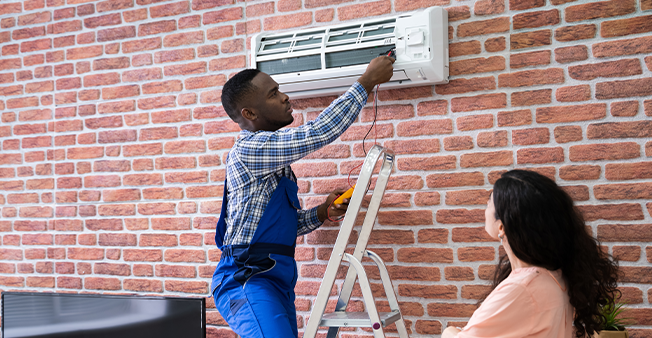
Do use photos of installers working on clean energy technologies and/or talking to homeowners and renters.

Don’ts: House Styles

Don’t use photos with houses or foliage that would not be found in MA, such stucco exteriors or ceramic-tiled roofs.

Don’t use photos with houses or foliage that would not be found in MA, including houses with mountains in the background.

Don’t use photos with houses or foliage that would not be found in MA, such as houses with palm trees or cacti.

Don’t use photos with houses or foliage that would not be found in MA, such cement-like or flat exteriors.

Don’ts: Technology Accuracy

Don’t show fossil fuel-powered technologies, like gas stoves, even if it’s just a background element.

Don’t show fossil fuel-powered technologies like radiators or baseboards.

Don’t show installations that are inaccurate, for example, an installer who looks like he’s air sealing incorrectly.

Don’t show technologies not recommended or not eco-friendly, like pink insulation (fiberglass).

Don’ts: Technology Availability & Location

Don’t use photos of technology brands that are not available to MA customers.

Don’t use photos of technology brands that are not available to MA customers.

Don’t use photos of locations that do not look like MA.

Don’t use photos that are not full color, and don’t use photos in an outdoor setting when talking about indoor-based technologies.

VIDEOGRAPHY

Video is a great tool to increase engagement on the website and social media, because it captures attention faster than text and increases retention of information. This also makes them a great way to explain complex concepts and show examples of clean energy solutions.

Customers Stories & Live Action

Purpose

The main purpose of these videos is to provide real-life, relatable success stories from MA residents who have joined the clean energy transformation and adopted clean energy solutions.

Graphics

These videos should all follow a similar format. When creating new live-action video content, follow the same styles for the intro/outro, titles, chapter cards, etc. These elements can be shared on request.

Videography

Prioritize natural lighting and use real-life settings, when possible, instead of stock footage. Videos should be informative, but also positive and convey excitement around clean energy solutions. People who appear in our videos can be referred to by their first name and last initial (i.e., Jane D.). If homes appear in videos, the house number can be blurred to protect the privacy of the success story. Success stories should include videos or photos of the home improvements being described and not only have a person shown talking about it.

Captions

Correct YouTube’s autogenerated captions for spelling, punctuation, and grammar after a video is uploaded to YouTube.

Animation

Purpose

These animations share ways to adopt clean energy, so they are technology focused. There should be equal emphasis on the technologies/ solutions and the characters. Videos ensure that each technology is portrayed accurately. It’s important that these videos communicate how easy it is to make the switch.

Graphics

All animations should follow the current design style when creating characters and backgrounds. As mentioned in the Photography Don’ts section above, use a variety of modest New England housing styles and an outdoor environment that looks like New England. People depicted in animations should include various ethnicities.

Structure

These videos should have a strong sense of forward motion – a long shot moving from one topic to the next. This conveys an idea of our community coming together and taking action to ensure a cleaner future.

ORGANIC SOCIAL MEDIA

We primarily post about Clean Energy Lives Here on Facebook and Instagram. Social media posts should be created specifically for those channels. Please provide dimensions or aspect ratio & resolution guidelines for social media graphics. Keep graphics within the dimensions of 1080×1080 for Facebook and 1080×1350 for Instagram. Resolution should be at least 96 ppi. For video posts, the resolution should be 1080 pixels.

Messaging

Lead with savings, incentives, and health benefits rather than emphasizing environmental phrases like ‘carbon footprint’ or ‘greenhouse gas reduction’ to best align with changes to the way the state is talking about these technologies and incentive initiatives. Provide references that Massachusetts residents would be familiar with when needed. For example, when talking about travel time, you can say “a quick coffee run” (10-15 minutes) or when discussing energy savings, compare the things like, “cutting your gas bill in half” or “enough to power your fridge for a month.

Topic Selection

Consider relevant current events, seasons, and holidays to increase reach.

Hashtag Research

Use relevant technology/solution and location hashtags, and consider researching hashtags to see what’s popular or trending.

Social Media Images

Use original photos of a person or people with clean energy technologies, ideally with the person or people facing the camera. People shown in social media photos should be diverse to reflect the population of Massachusetts.

WEBSITE & ELEMENTS

Use the following templates when building new pages for the Clean Energy Lives Here website. Templates will be viewable and copyable but not editable.

Solution Landing Page

Use this template when creating a new solution landing page.

Article Page

Use this template when creating a new article.

Join the Clean Energy Transformation

Let's work together to reduce greenhouse gas emissions from our homes and build a clean energy future for Massachusetts.

GO CLEAN
close-link